

Get started
Get started

In response to mounting pressures from climate change, industries of all kinds are altering their practices and turning to environmentally friendly, sustainable solutions for doing business. Increasingly, the fleet transport industry is a big factor in that conversation.
Traditional fleet transport contributes to environmental stress through greenhouse gas emissions from trucks and other vehicles transporting goods. That's why many companies are considering switching from ICE vehicles to electric ones to fully reap the benefits of fleet management.
Curious about the differences between ICE vs EV vehicles and how they relate to fleet transport? Keep reading for everything you need to know about the ICE vehicle meaning, environmental impact, and what this transition means for your fleet.
{{CTA}}

Understanding the meaning of ICE vehicles is essential for fleet operators evaluating their options. An internal combustion engine vehicle, commonly called an "ICE vehicle," is an automobile powered by conventional, oil-derived resources, such as gasoline or diesel fuel. The internal combustion engine works by igniting a fuel-air mixture inside combustion engines, where combustion gases push pistons through power strokes to generate motive power.
Compared with an electric vehicle or a hybrid electric vehicle, an ICE vehicle offers more engine power and is typically less expensive to purchase up front. ICE-based vehicles have dominated the transportation sector for over a century, with the first internal combustion engine dating back to the late 1800s.
That said, once you factor in the fuel costs, regular maintenance costs, and repairs, internal combustion engine vehicles tend to be more costly over their full life cycle. According to fleet operator data, fuel accounts for 30% or more of a long-haul trucking company's expenses—making fuel economy a critical factor in the total cost of ownership.
More than that, ICE vehicles emit more greenhouse gases. When they're in use, combustion engines release harmful gases and chemical agents into the air through the exhaust pipe. These harmful pollutants can dilute air quality and contribute to global warming.
There are three primary kinds of pollution that ICE vehicles emit:
Air pollution – This refers to greenhouse-gas-causing emissions and other toxins released into the air while you're driving. Tiny particles of gas are emitted in the engine exhaust through the tailpipe. Tailpipe emissions account for the majority of the 24 lbs of carbon dioxide emissions that cars produce per every gallon of gas—and that's just for passenger cars. Transport vehicles with larger diesel engines are heavier and, thus, produce more emissions. According to the EPA, transportation accounts for 28% of total U.S. greenhouse gas emissions, making it the largest contributor. Medium- and heavy-duty trucks alone account for 23% of transportation sector emissions.
Land waste – Leaks and spills of oil and diesel fuel are another way in which ICE vehicles are considered harmful to the environment. These toxic liquids seep off roads and highways and into the ground, where they can damage ecologies and pollute water sources.
Noise pollution – The noise produced by motor vehicles might not seem like a major threat, but according to the World Health Organization, even this kind of pollution can harm populations. Studies have linked it to a range of health issues, including cardiovascular decline and mental health concerns. Electric vehicles operate much more quietly, even at low speeds.
Note that these are only the impacts of using automobiles during normal operation. Unfortunately, the manufacturing of ICE vehicles takes another toll on the planet, contributing to energy consumption and material waste.
Likewise, their reliance on oil-based fossil fuels creates an additional environmental burden. Those 24 lbs of carbon dioxide emissions noted above are what the average ICE car produces for every gallon of gas. About five of them relate to how gasoline is sourced, produced, and distributed through the distribution system. Beyond that, drilling for oil and natural gas disrupts wildlife, damages wildlands, and pollutes oceans.
Electric vehicles, or EVs, represent a fundamental shift in automobile technology. Instead of using an internal combustion engine with spark ignition, these vehicles rely on battery power from lithium-ion batteries. And instead of burning fuel at gas stations, electric cars are plugged into a charging station or charging point. How's that for enhanced fleet fuel management?
The electric vehicle category includes several vehicle types:
Typically, electric vehicles have been more expensive up front than ICE vehicles, though this is changing rapidly as battery technology improves and manufacturing scales up. The cost gap is narrowing—according to BloombergNEF's 2024 New Energy Outlook, battery electric vehicles in urban duty cycles could reach cost parity with ICE vehicles before 2030.
Likewise, the common assumption that EVs are only available as sedans is also changing as more manufacturers work to produce both fully electric and hybrid electric models in a greater variety—including fleet transport trucks like the Tesla Semi, Freightliner eCascadia, and Volvo VNR Electric.
One of the most significant improvements in electric cars has been range. The median range of battery electric vehicles for model year 2024 reached a record high of 283 miles per charge—more than four times higher than the median range a decade ago. Many EV vehicles now achieve 300-400+ miles, with the longest-range models exceeding 500 miles on a single charge.
The charging infrastructure has expanded dramatically to support this growth. As of late 2024, there are over 200,000 public charging ports across more than 82,000 charging station locations nationwide—and the network continues growing at approximately 25% annually. Over 95% of Americans now live in a county with at least one public charging station.
When it comes to energy efficiency, electric vehicles dramatically outperform internal combustion engine vehicles:
This efficiency advantage means EVs require far less energy to travel the same distance. An electric motor delivers power directly to the wheels, while a combustion engine must convert burning fuel through multiple mechanical processes, losing significant energy as heat and hot gases through the exhaust pipe.
That said, when it comes to long-term savings, an ICE vehicle can't compete with an electric car. Electric vehicles can save you money in two key ways:
Fuel savings – When it comes to searching for ways to reduce fuel cost, EVs offer substantial savings. According to Department of Energy data, electricity costs roughly $0.08 per mile compared to $0.12-0.15 per mile for gasoline in most cars—savings that compound significantly across a fleet. EV batteries can be charged at charging stations nationwide, and battery power offers consistent, predictable energy costs compared to the volatility of diesel fuel prices.
Maintenance savings – An electric car requires less maintenance than an ICE vehicle. Electric motors and battery technology don't require the regular attention that combustion engines need—no oil changes, no spark plugs, no timing belts, no exhaust pipe repairs. As an oil-free solution with fewer moving parts, you won't be shelling out money on the routine maintenance that internal combustion engine vehicles demand.

Of course, there are significant environmental benefits associated with EVs, in addition to the financial perks. Compared to ICE vehicles or gas-powered vehicles, electric vehicles are by far the more environmentally conscious option.
The first reason is that battery electric vehicles do not produce tailpipe emissions during normal operation. With no gasoline or diesel fuel needed to run the electric motor, there's nothing to emit through an exhaust pipe. EVs produce zero nitrogen oxides, zero particulate matter, and zero direct carbon dioxide emissions while driving. As such, their contribution to air pollution is drastically reduced.
Lifecycle Emissions: The Full Picture
Some critics point to production emissions from battery manufacturing. It's true that battery electric vehicles have higher upfront manufacturing emissions—an EV produces approximately 8.8 metric tons of CO₂ during production compared to 5.6 metric tons for an ICE vehicle. However, this initial carbon deficit is quickly overcome during the vehicle's full life cycle.
According to EPA data and multiple lifecycle studies, electric vehicles reach carbon parity with ICE vehicles at approximately 15,000-20,000 miles—roughly one year of typical vehicle ownership. After that point, every mile driven in an EV produces fewer emissions than the equivalent ICE car. Over a vehicle's lifetime, battery electric vehicles produce approximately 50-70% fewer total emissions than comparable internal combustion engine vehicles, even accounting for production emissions and electricity generation.
The environmental benefits continue to improve as the electrical grid adds renewable energy sources. In states with high renewable energy penetration, EVs can achieve carbon parity in as little as six months. This built-in scalability means electric vehicles become cleaner over time without any changes to the vehicle, powered by electric energy.
{{CTA}}
According to Department of Transportation data, more than 49 million tons of goods are shipped across the United States every day. That represents all the grocery items on their way to store shelves, the electronics and apparel heading to consumers, plus the raw materials transported to manufacturing facilities. All told, fleet transportation ships about $53 billion worth of goods daily—making trucking a $700+ billion industry that forms the backbone of the American economy.
But all of that transport takes a toll on the environment. Because so many trucks used to transport goods are powered by internal combustion engines—specifically diesel engines—they share the same environmental hazards as personal motor vehicles, generating air pollution, noise pollution, and land waste.
ICE vehicles used in fleet transport have been linked to air quality issues such as smog, as well as ecological stressors from land waste. The transport sector uses enormous amounts of energy to connect people everywhere with the products they need.
The industry is heavily reliant on two vital resources:
Diesel fuel – The American trucking industry spends approximately $105 billion on diesel fuel annually. This level of fuel consumption contributes to tailpipe emissions and increases demand for fossil fuels, which, in turn, impacts the environment through pollution associated with extraction and refining. Fuel economy improvements in diesel cars and trucks have helped, but combustion engines inherently produce emissions.
Energy consumption – Fleet transportation claims more energy than any other sector of the freight transportation industry, including pipeline, rail, and water. Trucks move 64% of all freight tonnage and 69% of freight value in the United States, making the transition to alternative fuels and electric vehicles particularly impactful for reducing the transport sector's environmental footprint.
For this reason, it's more important than ever for fleet transportation companies to rethink how they do business. And many of them, from huge corporations to smaller businesses, are exploring the transition from ICE vehicles to EVs and other green vehicles. Fleet electrification planning is one way businesses can prepare for this transition.
The demand for EVs in fleet transportation continues to grow. Driven by a desire to cut costs and pollution, fleet companies are putting pressure on EV manufacturers to accelerate production of freight-worthy electric vehicles.
According to a McKinsey survey of over 200 U.S. trucking fleets, two-thirds are committed to decarbonization, and over half are actively piloting zero-emission vehicles. However, fewer than 10% currently see a viable path to scaling ZEV adoption—highlighting both the industry's commitment and the challenges that remain.
Early adopters are demonstrating what's possible:
The consensus among fleet operators: medium-duty vehicles with predictable routes represent the current "sweet spot" for electrification. Last-mile delivery, drayage (port trucking), and return-to-base operations are ideal use cases for EVs to maximize their advantages in energy efficiency and low-cost operation.
For fleets not ready for full electrification, a hybrid approach makes sense. Many operators are maintaining their ICE vehicles while gradually adding battery electric vehicles or plug-in hybrid electric vehicles for appropriate routes. This allows fleets to:
Whether your fleet runs ICE vehicles, hybrid electric vehicles, plug-in electric vehicles, or is planning an EV transition, effective fleet management tools help you maximize efficiency and minimize costs at every stage.
That's great news for shipping companies looking to reduce their environmental impact and take advantage of the long-term savings of electric vehicles. But it isn't just automobile manufacturers who are helping businesses use EVs effectively. Companies across sectors are innovating ways for transportation businesses to operate more environmentally responsibly.
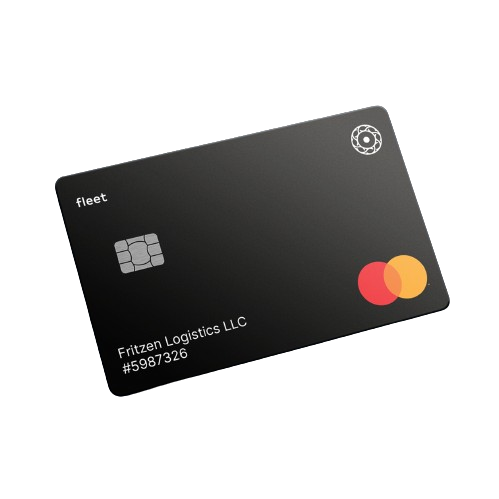
For example, many companies rely on a business fuel card that drivers use to fuel up without dipping into their own pockets. AtoB brings that convenience to fleets of all types—whether you're running traditional ICE vehicles, transitioning to a mixed fleet, or managing fuel cell vehicles and other alternative fuels.
This powerful and convenient fuel card comes with business features you can't afford to pass up, including:
The median range for battery electric vehicles in model year 2024 is 283 miles per charge—more than four times higher than a decade ago. Many electric cars now achieve 300-400+ miles, with the longest-range models exceeding 500 miles. This exceeds the daily driving needs of most fleet operations.
A hybrid electric vehicle (HEV) combines a smaller internal combustion engine with an electric motor and a small battery, using regenerative braking to capture energy, but it cannot be plugged in. A battery electric vehicle (BEV) is fully electric with no combustion engine, powered entirely by a large battery charged at a charging station. Plug-in hybrid electric vehicles (PHEVs) offer a middle ground—they can be charged externally and drive on electric energy alone for shorter distances.
It depends on your operations. Medium-duty delivery vehicles, drayage trucks, and return-to-base fleets are the current "sweet spot" for electrification, with fleets like Schneider National logging over 1 million miles on electric trucks. Long-haul operations face more challenges due to range and charging infrastructure, though hydrogen fuel cell vehicles and other alternative fuel vehicle options are emerging for these use cases.
Savings vary by operation, but electric vehicles typically cost $0.08 per mile for energy, compared with $0.12-0.15 per mile for diesel fuel—potentially 30-40% savings on fuel costs. Combined with lower maintenance costs (no oil changes, fewer brake replacements due to regenerative braking, no exhaust pipe repairs), some medium-duty fleets report 7-10% total cost of ownership savings.
Managing an entire fleet of freight transport trucks isn't easy. It requires coordinating many moving parts and a savvy understanding of business functions and operations. Paying employees, budgeting fuel expenses, mapping routes—there's a lot to consider if you want things to run smoothly.
Fortunately, there's a way to streamline the entire process and take control of your entire fleet.
Welcome to AtoB. We're helping fleet companies everywhere fine-tune their operations, revitalize their business, and keep their trucks on the road. Our cutting-edge platform makes it easy to manage all your costs in one place. From processing payroll to paying for fuel, we've covered every aspect of the business to help you save money, retain drivers, and keep your fleet moving.
Our platform is user-friendly and integrates with your existing EV fleet management systems, and our driver-centric app is packed with features to help your drivers find the best routes and fuel deals. Don't delay.
Why wait to fill out your AtoB fuel card application? Let AtoB fuel your fleet today and tomorrow. Learn more about EV Vehicles with AtoB.
{{CTA}}
References:

.jpg)